
Why can't defence "fail fast"?
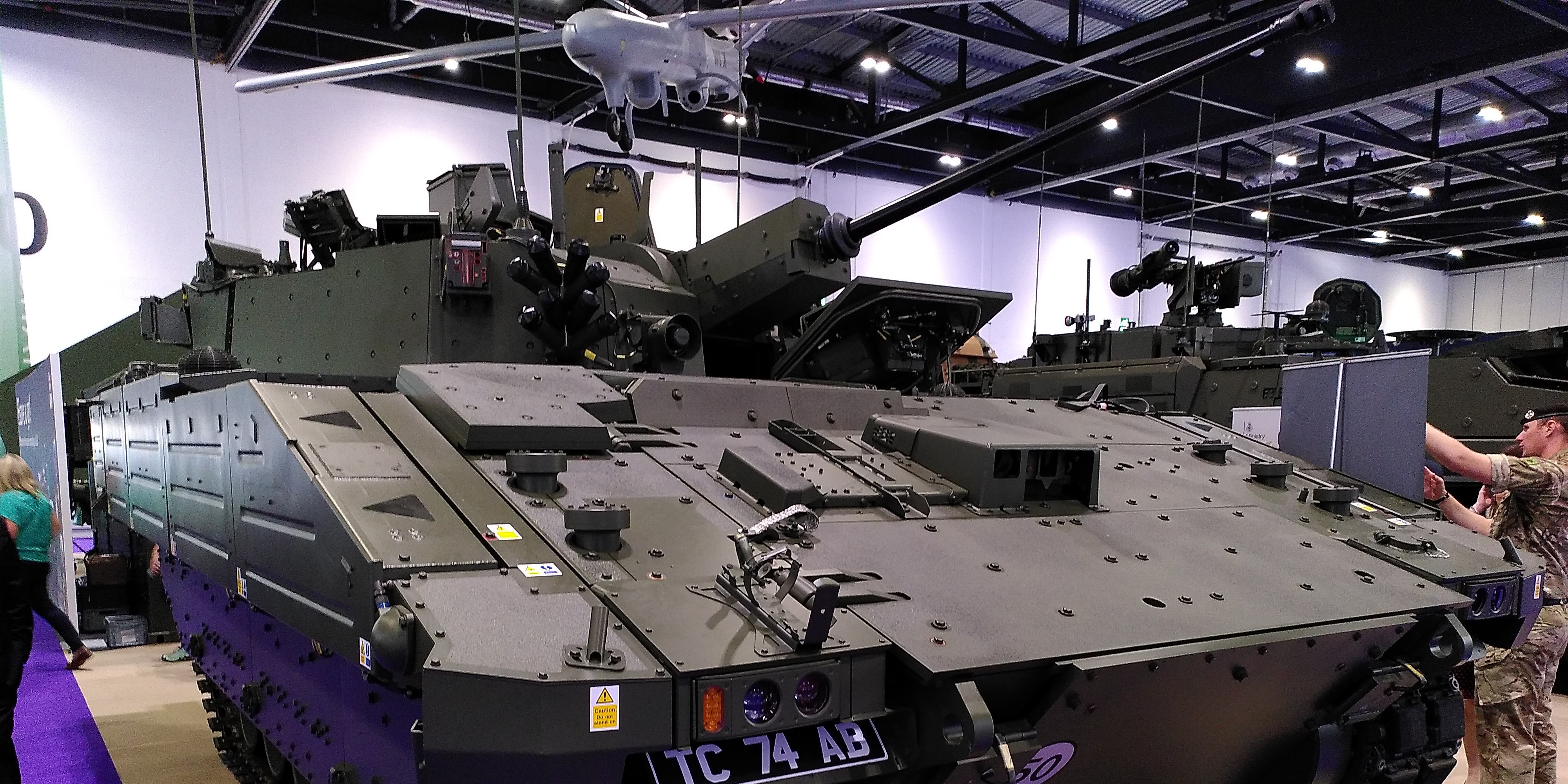
There's been a lot of commentary asking "what went wrong" with the UK's Ajax vehicle programme, but that's the wrong question. What we should be asking is why has a troubled programme been allowed to stagger on for so long, and why wasn't it cancelled sooner? While Ajax is the most recent, and egregious, example of a UK defence programme failure, it's far from alone. So why are failing programmes allowed to burn through taxpayers money for so long?
Clive Sheldon's 'Lessons Learned Review' of Ajax remains highly relevant and gives a detailed overview of how we arrived at the state of play as of 2023, but it doesn't seek to assign blame or 'name names'. But what is clear in that report, and since, is the extraordinary extent to which the Army and MOD has indulged General Dynamics to avoid taking difficult decisions. To re-cap:
- The vehicle started to encounter problems during prototype testing in 2014, and at no point during the following 10+ years has it been demonstrated to be safe and fully compliant with user requirements.
- The MOD awarded GD a production contract before the prototype demonstration phase was completed, and despite being aware of those initial problems.
- In 2017 with the programme falling behind schedule, the MOD and GD agreed a 'recast' schedule and introduced the concept of 'Capability Drops' - a ruse to allow GD to deliver (and get paid for) non-compliant vehicles.
- The MOD repeatedly redefined and relaxed the criteria for declaring Initial Operating Capability (IOC) in a doomed attempt to preserve the IOC date at the expense of IOC capability.
- Despite multiple reports of problems from various experts, the Director Land Equipment played down the problems and sent unjustifiably optimistic reports upstream.
- In December 2019 the DE&S Project Team wanted to withhold payments to GD for failing to meet milestones, but were overruled by the Director Land Equipment and Chief of Materiel (Land) without referring the decision upwards.
- The Army and MOD eventually agreed a five year programme delay, with IOC slipping from 2020 to 2025.
- IOC was declared in November 2025 (since withdrawn) despite reports of ongoing noise and vibration injuries that were withheld from Government Ministers.
Clearly the MOD was prepared to do almost anything except cancel the contract. Of course beyond Ajax there is a long and inglorious history of UK defence contracts dragging on for years, burning money, before eventually getting cancelled - e.g. Nimrod MRA4, Warrior CSP, MORPHEUS EVO. You can probably name other examples yourself.
So why doesn't the MOD cancel programmes earlier?
Clearly much taxpayer's money could be saved, and less of the perma-inadequate defence budget wasted, if the MOD killed failing programmes earlier. The reasons this doesn't happen are numerous, including the perverse incentives and defensive behaviour that the procurement system forces on the budget holders, the professional and Service reputation of those involved, and the 'sunk cost fallacy' that is alive and well, and living in Whitehall:
1. Conspiracy of optimism
Getting major defence programmes under contract is a long-drawn out and painful process involving budget battles with the Treasury and other Services, and prolonged and politicised tendering. Once a contract is finally let, nobody in the Project Team or industry wants to acknowledge serious problems, and it is easy in the earlier stages to assume that all problems are fixable in time.
2. Reputation
Success or otherwise will impact the reputation of senior individuals involved in the programme, but the MOD and the Services themselves are acutely aware of the justified previous criticism of defence procurement failures. Nobody wants to be the next 'Defence Procurement Failure" news headline, or feature in National Audit Office of Public Accounts Committee reports.
3. Revolving Door
The 'Revolving Door' from senior Forces and MOD positions to lucrative contracts in the private sector continues to spin freely. Without criticising individuals, we need to take a good look at whether somebody is handing out rose-tinted spectacles on the walk to the revolving door.
4. Fear of budget loss
Major programmes pass through a challenging Business Case process before gaining approval, which also involves the Treasury. If the MOD acknowledges a programme is failing and beyond recovery and decides to cancel it, the allocated budget is lost. Any new or replacement programme then goes back to the start of the process to fight for budget allocation and Business Case approval - a process likely to take years, while what remains of the original budget will be reallocated elsewhere. This creates a huge incentive to stick with a failing programme in the hope that it can be recovered, even if that involves significant delays and the need for additional funding - which is easier to fight for than a brand new programme.
5. Sunk Costs
The longer a failing programme is allowed to continue, the more money gets spent and more deliveries are made, and the stronger the 'sunk cost fallacy' becomes. The record of the MOD recovering money already spent from Prime Contractors is poor, in part because the MOD itself becomes complicit by indulging failing programmes for so long.
What needs to change?
The root cause of these problems come down to accountability and oversight. Information flow is filtered (when it's bad news), and too many key figures in the process are being allowed to 'mark their own homework'. There are semi-independent expert bodies providing reports and raising concerns about programmes, such as DSTL, Trials & Development Units, Defence Quality Assurance Field Force etc but the Ajax programme has shown that these reports can too readily be filtered or suppressed. Once the Business Case has been approved, the MOD has too much freedom to relax and redefine user requirements, delivery schedules and IOC criteria without external scrutiny. The Government should consider the following changes to increase accountability and identify the true extent of programme failure before too much taxpayer money is wasted:
1. Enhance the role of the National Infrastructure and Service Transformation Authority (NISTA)
Formerly known as the Infrastructure & Projects Authority, NISTA is the Government body tasked with monitoring and improving Government major project delivery, including large defence programmes. It issues annual reports and allocates Green, Amber or Red 'Confidence Ratings' to projects. However while NISTA can track programme progress in terms of money spent and milestones achieved, it relies on self-reporting by project teams when it comes to technical and safety issues, or requirements changes.
NISTA should be tasked with providing greater technical and safety oversight to major programmes, and given the manpower and technical resources it would need to perform this additional role. It should also be given independent, unfiltered access to technical and safety reports, and visibility every time significant requirements are changed or IOC criteria are amended.
2. Dissemination of independent reports
We should not tolerate a situation where senior staff, including the Senior Responsible Owner (SRO), can claim not to be aware of problems that are being independently reported at lower levels, and bad news can be suppressed to avoid scrutiny.
All independent reports produced by the TDUs, DSTL, Safety Authorities, external consultants etc must be copied immediately on release, in unfiltered form, to the SRO and to NISTA.
3. Relaxation of criteria or requirements
A need to relax user requirements, delay deliveries or amend IOC criteria is an early warning that a programme is probably in trouble. The MOD should not have the freedom to do this without external scrutiny once a Business Case has been approved, and all such instances should be reported to the beefed-up NISTA.
Defence procurement has a well earned reputation for tolerating failure and delivering poor value for money. The Government must bring accountability and sunlight to ongoing defence contracts, stop the MOD from suppressing bad news, and develop a process to identify and halt failure early. The need to deliver capability and value from the defence budget is too urgent to accept 'business as usual'.